Evidence-Based Collective Healing
for a World Free from Violence
We are a Colombian organization with more than 15 years of experience in community mental health, mind–body methodologies, and restorative practices grounded in scientific evidence.
Violence harms mental health, weakens relationships, and erodes the social fabric. Breaking these cycles demands prevention and evidence-based solutions — not reactive responses.
In Colombia, there are only 11 psychologists and 3 psychiatrists for every 100,000 people — and more than 90% of them are concentrated in urban areas.
One in three adolescents is at risk of developing a mental health disorder.
In Colombia, nearly 50% of the workforce experiences burnout — chronic exhaustion resulting from prolonged workplace stress.
The mind and body function as an integrated system: over 80% of the signals carried by the vagus nerve travel from the body to the brain, shaping emotions, cognition, and how we respond to our environment.
One in five people affected by armed conflict presents symptoms of mental health disorders.
Mental disorders represent an annual economic burden of between 3% and 4% of GDP.
We transform individuals, relationships, and entire systems.
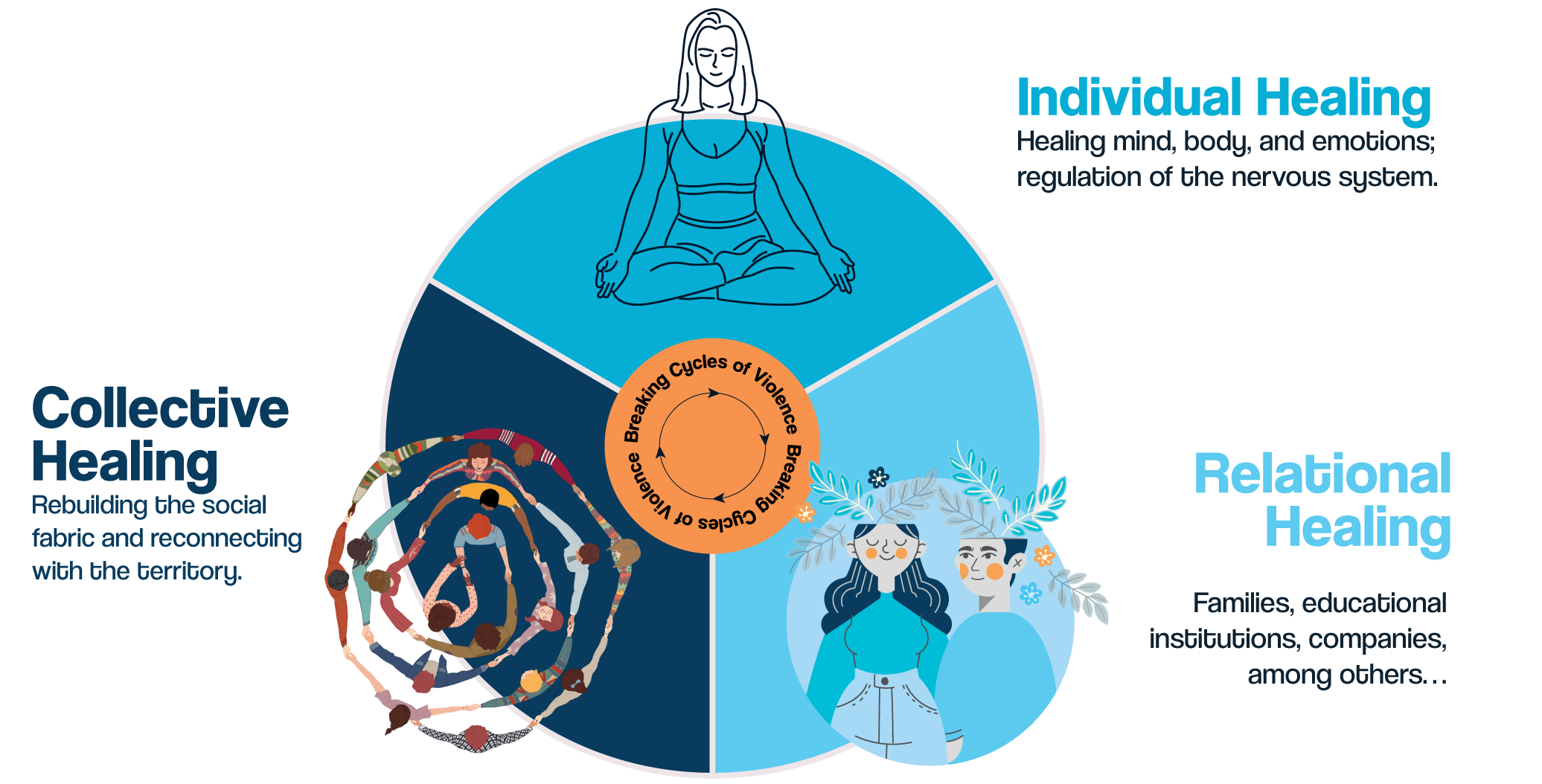
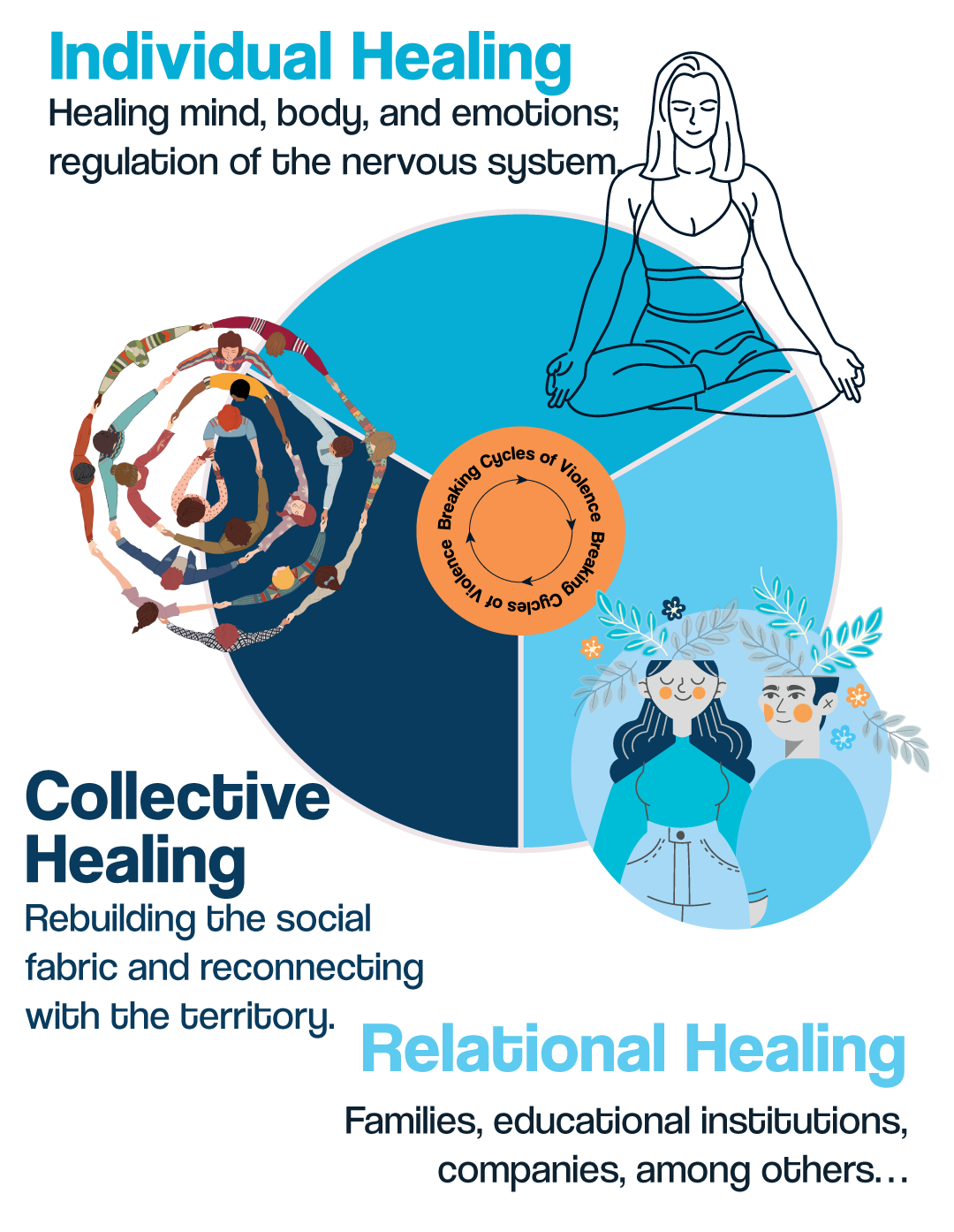
At Corporación Dunna, we take a systemic approach: we recognize that healing does not happen in isolation. We advance collective healing — a process in which all actors within a system regulate, reconnect, and transform together.
Publications in International Peer-Reviewed Journals
What Sets Us Apart
We do not rely on isolated solutions. We design evidence-based interventions that transform individuals, relationships, and environments, delivering measurable impact and long-term sustainability.
Rigorous impact measurement, including emotional and relational transformation
Sustainable, Replicable, and Scalable Outcomes
Social Innovation Through Mind–Body Methodologies and Restorative Practices
Scientific Protocols and Methodologies
Our Projects
Each Dunna project represents collective healing in action. We partner with communities and institutions to transform trauma into care, strengthen relationships, and create safer, more empathetic environments.
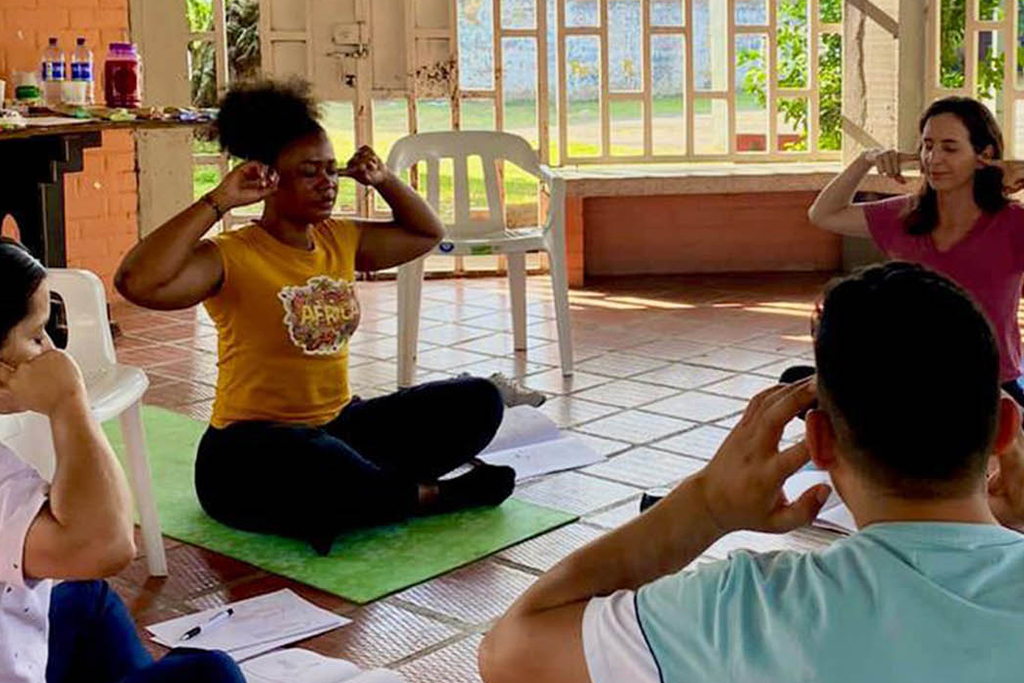
This strategy supports the emotional recovery of women affected by various forms of violence through yoga, peace education, and embodied narrative practices. To date, 250 women survivors from Ciudadela Nuevo Occidente in Medellín have been reached.
Bunsichari was our first reconciliation program and was launched in collaboration with key transitional justice institutions in Colombia: the ARN, the UN Verification Mission, the Victims’ Roundtable, and the Mayor’s Office of Viotá.
The pilot implementation of the comprehensive protocol for the prevention of and response to domestic violence—through restorative practices and mind–body strategies—was carried out in the city of Medellín, in partnership with the victims’ organization Las Madres de la Candelaria and their direct and indirect family members.
A scalable primary mental health care pathway for migrants was developed, based on innovative techniques validated by international scientific literature. These approaches primarily aim to stabilize the central nervous system and provide guidance for interpersonal relationships that foster community integration. The two core practice pillars are mind–body strategies and restorative practices.
“After the program, when I feel angry, I breathe deeply, close my eyes, remind myself that everything happens for a reason, calm myself, and avoid getting into trouble.”
“Now I’m able to adapt to different situations around me and bring out the best in myself.”
“It has helped me a lot. Now I understand how to encourage and support others.”
“What I learned gave me strength, wisdom, and the motivation to pursue my dreams. I felt truly happy and at peace.”
When you partner with Dunna, you drive real, lasting change
that prevents further violence and build long-term capacity.